Insurance Write-Off Categories in Australia
A plain-English guide to Australia's insurance write-off categories, what they mean for a buyer, and what they tell you about a wrecker's donor stock.
Why write-off categories matter
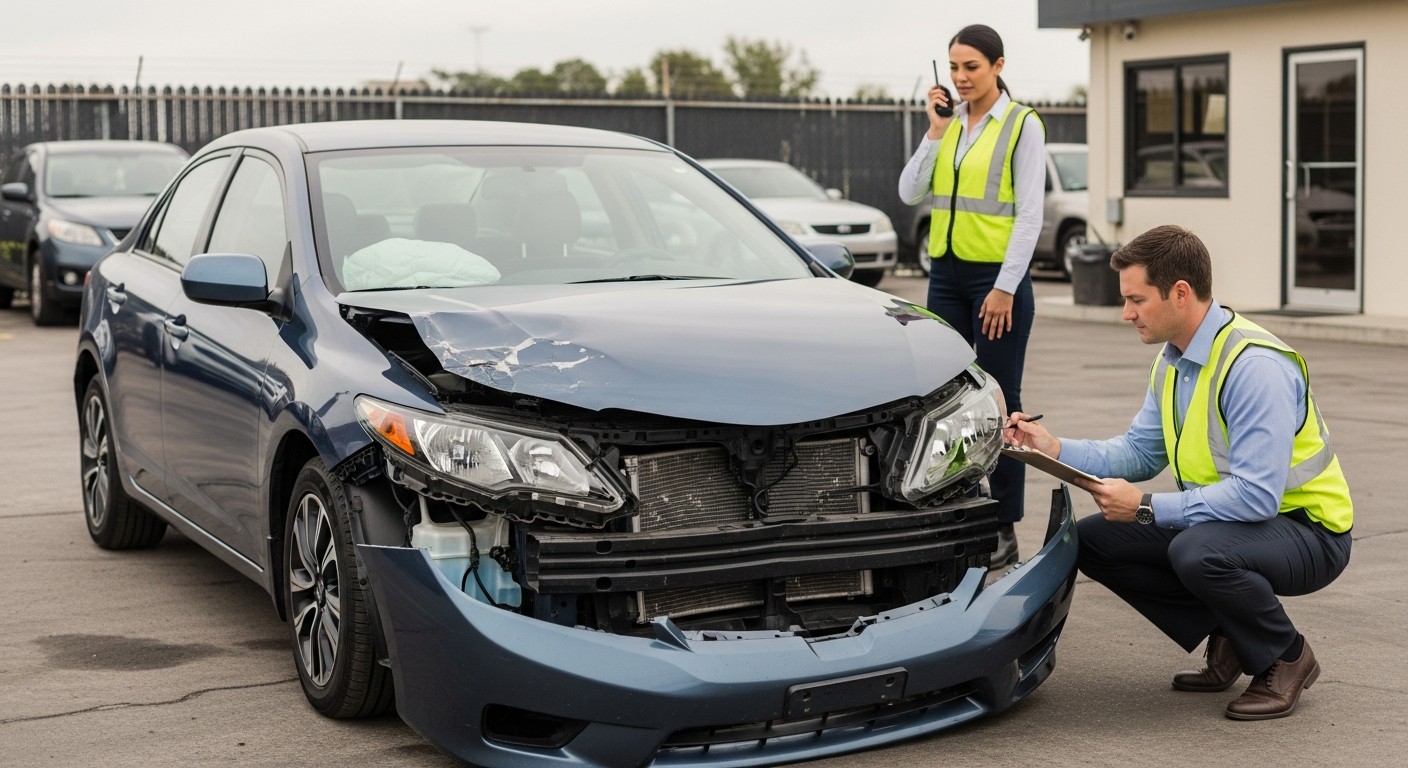
When an insurer decides a damaged vehicle isn't economical to repair, the vehicle is declared a "write-off" and recorded on the Written-Off Vehicle Register (WOVR) for the state it was registered in. From that point onward the vehicle has a permanent status that affects whether it can be driven on the road, how much it's worth, and whether it can ever be re-registered.
If you're buying a car, knowing its write-off status (and the category of write-off) is essential. If you're buying parts, knowing whether the donor was a statutory write-off (and why) tells you a lot about whether the parts are likely to be good. Either way, the category system is worth understanding properly.
The two main categories: statutory and repairable
At the highest level there are two categories of write-off in Australia: statutory write-off and repairable write-off. Statutory write-offs cannot be re-registered for road use anywhere in Australia. They can only be dismantled for parts or sold for scrap. Repairable write-offs (where they still exist as a category) can in principle be repaired, re-inspected and re-registered, although the rules around this differ by state.
Most states harmonised toward statutory-only over the 2010s, meaning if a car is written off it can never go back on the road in those states regardless of how repairable it might appear. NSW moved to statutory-only in 2011, followed by other states at various points. WA and a few other jurisdictions retain a repairable-write-off pathway, but interstate transfer rules limit what can be done with those vehicles outside their home state.
What makes a car a statutory write-off
The criteria that trigger a statutory write-off are set in state legislation and broadly include: structural damage to specific safety-critical zones; inundation in salt water above a certain level; fire damage that affects the safety cell; theft-recovered vehicles that have been stripped of major components; and any damage where repair would compromise safety regardless of cost.
Important: a vehicle can be a statutory write-off without having been in a heavy crash. Hail damage severe enough to compromise the roof structure, flood-damaged vehicles from cyclones or storms, and theft-recoveries with no body damage at all can all end up on the WOVR.
What it means for a car you might buy
If a VIN check returns "statutory write-off", that car cannot legally be registered for road use in any Australian state. Anyone selling such a vehicle as a runner is either misinformed or misleading you. The vehicle itself is not worthless — it can be sold for parts or scrap — but it's not a road vehicle.
If a VIN check returns "repairable write-off", the car was previously written off, has been or could be repaired, and may currently be registered (if a roadworthy and re-inspection process was completed). It's legal to drive but its history is permanent and is disclosed forever on the WOVR. That history typically means a 20–40% reduction in market value compared with the same model with a clean history.
If a VIN check returns no write-off record, the car has not been written off. (It may still have been in a crash and repaired by the previous owner with no insurance involvement — the WOVR only captures insurer-declared write-offs.)
What it means for parts
For parts buyers, the donor's write-off category and the reason for it are both useful information. A theft-recovery write-off (statutory because the engine and wheels were stripped, but the body and interior are mint) is an excellent source of panels, glass and trim. A hail-damage write-off is a great source of mechanical, interior and glass — but a poor source of roof, bonnet and bootlid.
A flood-damaged statutory write-off should be approached with caution for any electrical components. Water sits in connectors and looms long after the visible damage has dried out, and corrosion shows up months later. Reputable wreckers will flag flood-donor stock and discount it; less-reputable ones won't.
A heavy-front-impact write-off is a good source of rear panels, rear interior and rear suspension, but the front-end mechanical, radiators and front lights from that donor are often unsellable. Ask the seller what the donor was written off for if it isn't already in the listing.
How write-off status is recorded and checked
Each state's transport authority maintains its own WOVR. The federal-level National Exchange of Vehicle and Driver Information System (NEVDIS) collates write-off and registration data across states, and that's what most paid VIN check services query under the hood. A search returns the category and (sometimes) the date and cause of write-off.
Once a vehicle is recorded on the WOVR, the record is permanent. Re-registering it (where the state allows it for repairable categories) doesn't remove the record — it just adds a re-registration event on top of the existing write-off entry.
Buying ex-write-off cars deliberately
There's a legitimate market in buying repairable write-offs cheaply, repairing them properly, and either keeping or selling them with full disclosure. It can work financially, especially for cars where parts are easy to source from a wrecking network like GearSwap's. The buyer needs to budget realistically for the WOVR-related resale haircut, the cost of an engineer's report and re-inspection, and the time the project takes.
It only works if you're disciplined about disclosure. Selling a repaired write-off as if it had a clean history is fraud, and the WOVR record will be found by the next buyer's VIN check anyway. Honesty plus a fair price is the only sustainable model.
Write-offs and insurance going forward
Some insurers will not cover a vehicle that has been previously recorded as a repairable write-off; others will but at a higher premium or with limited cover. Get an insurance quote on the specific VIN before you buy a previously-written-off car, not after. Comprehensive cover availability and price are part of the true cost of ownership.
How a vehicle ends up assessed as a write-off
Insurers use an internal economic-loss formula: the cost of repair (parts, labour, paint, sublet, hire car) plus the salvage value of the wreck, compared with the agreed or market value of the vehicle pre-loss. If repair cost plus salvage is greater than market value (or a defined percentage of it, often 70–80%), the car is uneconomical to repair and is written off.
On top of that economic test, the statutory test asks whether any of the damage falls into the legislated criteria — structural damage to the safety cell, salt-water inundation, fire damage, severe theft-recovery stripping. If yes, the car is statutory regardless of the dollar maths. A late-model car with light cosmetic damage can become statutory if the damage happens to be in the wrong location.
What "hail damage statutory write-off" really means for parts
Hail-damaged statutory write-offs are one of the best parts-supply sources in the Australian market. The cars are typically near-new, low-kilometre, mechanically perfect — but the panels and glass are uneconomic to repair. Wreckers buying hail stock get an entire mechanical and interior parts catalogue from a 2-year-old donor for a fraction of an end-of-life vehicle's value.
If you're buying a mechanical part — engine, transmission, ABS module, alternator — and the listing notes the donor was a hail write-off, that's a positive signal, not a negative one. Mechanical condition on a hail donor is usually as good as the day the car left the showroom.
Reading a written-off vehicle history report
A typical paid VIN report shows: write-off category (statutory or repairable), date the write-off was recorded, state where it was recorded, and (sometimes) the reason — collision, hail, flood, fire, theft-recovery, malicious damage. Some reports include the assessed cost of repair, which gives you a sense of the severity.
Also look at registration history. A car that was written off in NSW, deregistered, then re-registered in Queensland a year later is doing nothing wrong — repairable write-offs can move between states under specific re-registration rules — but the history is worth understanding before you sign.
Selling a write-off vehicle
If you own a vehicle that's been recorded on the WOVR and you want to sell it, full disclosure is both the legal and the practical right answer. The WOVR record will surface in any buyer's check anyway. Disclose upfront in the ad, price accordingly, and have your repair documentation (engineer's report, repair invoices, parts receipts) ready to share. Buyers willing to consider an ex-write-off price the discount in; they will not price in deception.
Common myths about write-offs
"Repairable write-off means it's been repaired." No — it means it could be repaired. Whether it actually has been is a separate question, and you should see the engineer's report and inspection certificate before you buy.
"Statutory write-off cars are dangerous." Not necessarily — many became statutory because the cost of repair exceeded the value, not because the structural integrity was compromised. But they cannot be re-registered, full stop.
"Used parts from a write-off are inferior." The opposite is often true. A part from a 60,000-km hail-damaged donor is typically in better condition than the same part from a 250,000-km end-of-life trade-in. Donor history matters more than donor write-off status.
Frequently asked questions
What is a written-off vehicle in Australia?
A written-off vehicle is one an insurer has decided is uneconomic or unsafe to repair. Once written off, the car is recorded on the Written-Off Vehicle Register (WOVR) and its registration is cancelled. Most written-off cars end up at insurance auctions and are bought by wreckers for parts.
What is the difference between a statutory write-off and a repairable write-off?
A statutory write-off is too damaged to ever return to the road — it can only be used for parts or scrap. A repairable write-off has been declared uneconomic by the insurer but can, in some states, be repaired, re-inspected and re-registered. Rules vary by state, so always check your local transport authority before buying one.
Can I re-register a repairable write-off?
In some Australian states, yes — after a full structural repair and a written-off vehicle inspection. Other states have effectively closed the door on re-registering repairable write-offs to private buyers. Check your state's transport authority rules before buying any repairable write-off.
How do write-off categories affect resale value and insurance?
A car with a write-off history almost always sells for less than an equivalent clean-history car, and many insurers will only offer third-party cover (not comprehensive) on a previously written-off vehicle. Always disclose write-off status when reselling.
Are used parts from written-off cars safe to buy?
Yes — most used parts on the Australian market come from written-off donor vehicles, and the parts themselves are graded individually before sale. The write-off categorisation applies to the vehicle as a whole, not to undamaged parts harvested from it.
Ready to shop?
Browse 10,000+ used parts from verified Australian wreckers, or post a free parts request and have wreckers quote you direct.
Browse Parts Post a RequestJump straight to listings
Popular categories
Browse by state