VIN Check Explained: How to Read and Verify a VIN in Australia
What a VIN actually is, how to decode it, and why a paid VIN check before buying a used car or part is the cheapest insurance you can get.
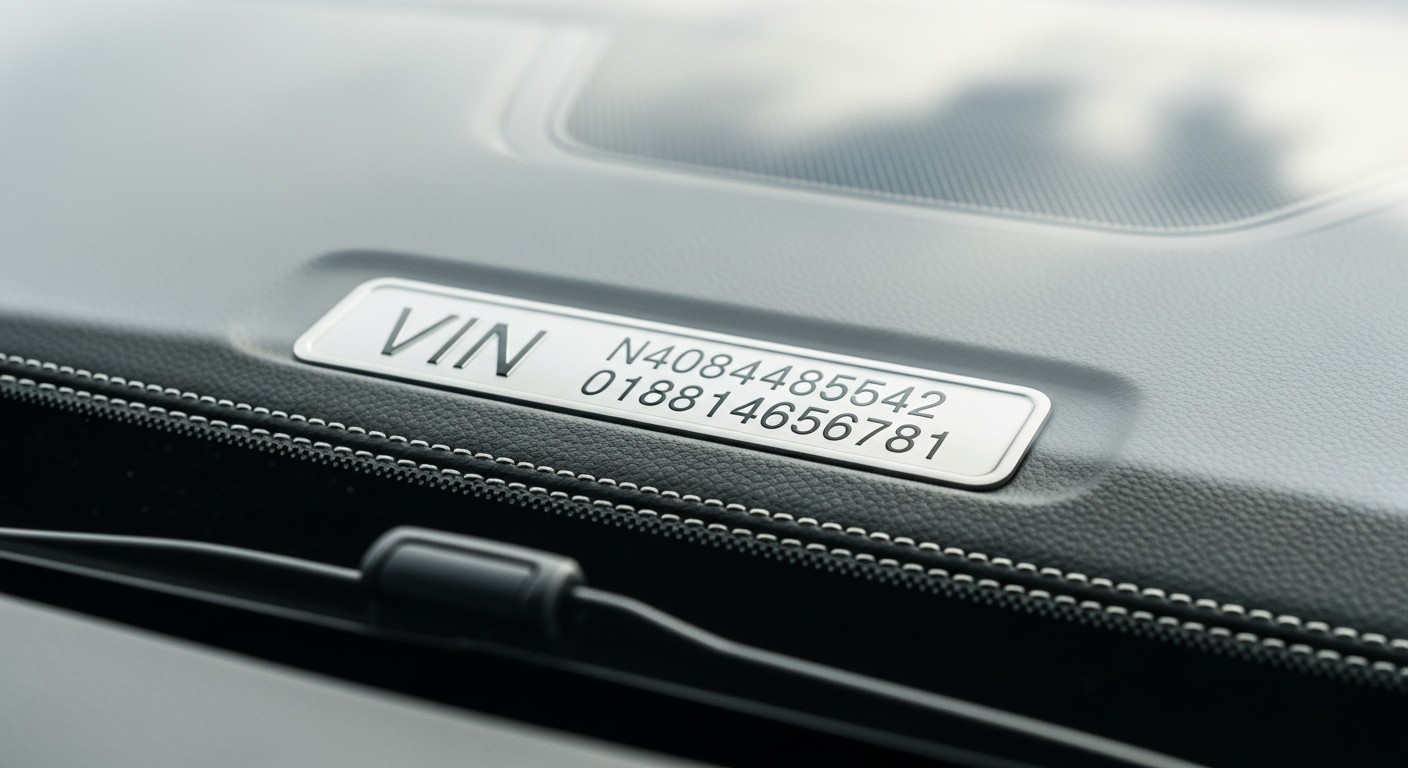
What a VIN actually is
VIN stands for Vehicle Identification Number. It's a 17-character code uniquely assigned to every vehicle manufactured for sale in or import to Australia since 1989, and it's the single most useful identifier on a car. The VIN tells you what the car is, where and when it was built, what was originally fitted to it, and — through the various national checking services — what's happened to it since.
You'll find your VIN stamped on the firewall in the engine bay, on the dash visible through the lower windscreen, on most door jamb compliance plates, and printed on your registration certificate. On older imported vehicles built before 1989 you may instead have a chassis number, which is similar in function but shorter and follows the manufacturer's own format rather than the ISO 17-character standard.
How a VIN decodes
A 17-character VIN is structured. The first three characters are the World Manufacturer Identifier (WMI) — "JTH" is Lexus, "WBA" is BMW, "6T1" is Toyota Australia. Characters 4–8 are the Vehicle Descriptor Section: model, body type, engine, restraint system. Character 9 is a check digit (used in North American VINs to detect typos). Character 10 is the model year. Character 11 is the assembly plant. Characters 12–17 are the production sequence number.
From those 17 characters a manufacturer's build database can return the original factory specification: trim level, paint code, transmission, engine, optional equipment fitted at the factory, even the destination market. That's why a VIN is so useful when buying a part — it lets a wrecker confirm the donor and the recipient car are an actual match, not just a visual match.
Why a VIN check matters when buying a used car
Australia maintains national registers that, when checked against a VIN, will tell you if the car has finance owing on it, has been recorded as stolen, or has been written off as a statutory or repairable write-off. Buying a car with finance owing means the financier can repossess it from you. Buying one recorded as stolen means it can be seized. Buying one written off and re-registered means you should know what happened to it before you sign.
The Personal Property Securities Register (PPSR) is the official Commonwealth register for finance and stolen status. It costs a few dollars to search and gives you a certificate you can rely on. The various state Written-Off Vehicle Registers (WOVR) are typically searched via a paid service that aggregates them — there are several reputable providers.
What a paid VIN check report typically includes
A full paid VIN check report typically includes: PPSR search (finance, stolen, registered security interests), written-off status across every state, odometer history where available from previous registrations and roadworthy reports, registration history (states the car has been registered in), and a market valuation range.
Some reports also flag whether the car has been previously used as a hire car, taxi, rideshare or driving school vehicle. Those former uses don't make a car bad, but they do mean the kilometres on the clock have been harder kilometres than a private owner's, and that's worth knowing before you pay private-sale money.
Free VIN checks: useful, but limited
Several manufacturers offer free VIN-decoder lookups on their websites that will return the original build sheet — useful for understanding what was fitted to the car when new. Some state transport authorities offer a free registration-status check. The PPSR and WOVR data, however, are not free and you should always pay for a proper report before handing over more than a few hundred dollars.
Free third-party "VIN check" sites that ask for an email address before showing results are usually marketing funnels, not data sources. The real data costs money to access.
Using the VIN when buying parts
When you submit a parts request on GearSwap, including your VIN lets verified wreckers confirm exact fitment before quoting. That's the difference between getting a quote on "a Hilux headlight" (vague, often wrong) and a quote on the precise headlight that fits your specific 2018 Hilux SR5 GUN126R built in October 2017 with the LED projector option (specific, almost always right).
VIN matching also matters for programmed electronics: ECUs, BCMs, instrument clusters, key modules. A used ECU from a different VIN typically needs to be flashed to your VIN before it'll talk to the rest of your car's network. A good wrecker will offer that programming as part of the sale, or refer you to a programmer who can do it locally.
Watch for VIN tampering
VIN-cloned cars — stolen cars with a legitimate VIN copied from a similar wrecked car — are rare but they do exist. Signs to check: VIN plate on the dash and the firewall match each other and match the rego papers; the rivets holding the compliance plate look factory and not recently replaced; engine and transmission stampings (where the manufacturer stamps them) match the body VIN; and the build date on the compliance plate is consistent with the VIN's tenth character.
If anything doesn't match, walk away. A PPSR check tells you what the register says, but it can't tell you that the physical VIN on the car in front of you actually belongs to that VIN.
VIN check as a habit, not a one-off
Run a PPSR check the day you sign, not a week before — finance can be registered against a vehicle in the meantime. Save the certificate. If you're buying interstate, ask the seller for a copy of the rego papers and the compliance plate photo so you can confirm the VIN you're checking is the VIN on the car you're buying.
It's $2–$10 of insurance that can save you a five-figure problem. There's no reason to skip it.
A worked example: decoding a typical Australian-delivered VIN
Take a hypothetical 2018 Toyota Hilux SR5 with VIN MR0HA8CD800123456. Reading position by position: "MR0" is the World Manufacturer Identifier for Toyota Thailand passenger vehicles. "HA8CD8" is the Vehicle Descriptor Section identifying it as a Hilux 2.8 turbo-diesel dual-cab. The eighth character indicates the body and engine combination. The ninth is a check digit. The tenth, "0", encodes the model year.
Characters 11–17 ("00123456") tell you which assembly plant built the car and where in the production sequence it sat. From that string, a wrecker can confirm — without seeing your car — whether their donor is the right engine, the right driveline, the right body and the right destination market. None of that is visible from a photo of the outside of your ute.
Compliance plate vs VIN — what each one tells you
The compliance plate is a separate label fixed to the vehicle (typically in the engine bay or door jamb) that records the date the vehicle was certified for sale in Australia and the importer or manufacturer responsible. The build date on the compliance plate is sometimes months earlier than the compliance date — a car "built in October 2018, complied April 2019" was manufactured in 2018 but didn't enter the Australian fleet until 2019.
Both dates matter. Insurance and rego often use compliance year. Parts catalogues and OEM build databases use build year. When you submit a VIN-based parts request, give the build date — that's the one the wrecker uses to find the right donor.
Why VINs matter for parts that need to be coded
Modern cars are full of modules that are paired to a specific VIN at the factory: the engine ECU, body control module, instrument cluster, key receiver, infotainment head unit, and various ADAS controllers. Plugging in a used module from a different VIN typically results in fault codes, immobiliser lockouts, or features that don't work properly until the module is reflashed.
Some manufacturers allow VIN reflashing through an authorised dealer or with a generic programming tool; others lock the modules so tightly that reuse is effectively impossible without specialist equipment. Before buying any used module, ask the seller whether their stock is pre-flashed to your VIN, locally programmable, or supplied virgin.
VIN reports for vehicles you already own
You don't have to be a buyer to benefit from a VIN check. Running a check on a car you already own surfaces any new finance interests registered against it (sometimes by a previous owner who didn't fully discharge their loan), confirms it isn't on the stolen register, and is a useful first step if you're preparing to sell. A clean VIN report attached to a private-sale ad gives the buyer one less thing to worry about and supports your asking price.
When a VIN check isn't enough on its own
A VIN check covers what's been recorded against the vehicle. It does not cover repairs done outside the insurance system — a previous owner who put the car into a tree on a private property and got a panel beater to fix it cash-in-hand will not show on the WOVR. For that reason a paid VIN report is necessary but not sufficient: the other half of due diligence is a physical pre-purchase inspection by an independent mechanic who can spot panel-beater work that the report won't show.
Frequently asked questions
What is a VIN and where do I find it?
A VIN (Vehicle Identification Number) is the unique 17-character code that identifies your car. In Australia you'll find it on your registration papers, stamped into the firewall under the bonnet, and on a compliance plate on the door jamb or engine bay. The same VIN appears on the windscreen of most modern cars.
Why should I run a VIN check before buying a used car?
A VIN check tells you whether the car is recorded on the Written-Off Vehicle Register, whether it has finance owing through PPSR, whether it's been reported stolen, and often gives you odometer history. It's the cheapest insurance you can buy before handing over money for a used vehicle.
What is the difference between a free VIN check and a paid PPSR report?
Free VIN lookups typically only confirm basic build details. A paid PPSR (Personal Property Securities Register) certificate is the official Australian government check covering finance, write-off status and stolen-vehicle records. For any used-car purchase, the paid PPSR report is the one that matters.
Can a wrecker use my VIN to find the right part?
Yes — and they prefer it. The VIN encodes the exact factory build of your car including engine code, transmission, trim level and option packs. With your VIN a wrecker can confirm the part on their shelf is the same variant your car needs, instead of guessing from year and model alone.
Is it safe to share my VIN with a wrecker or marketplace?
Yes. A VIN by itself does not give anyone access to your car or your account; it's the equivalent of sharing your number plate. Sharing your VIN with a Verified Seller on GearSwap Marketplace lets them run a Fitment-Matched check and quote you on the exact part your vehicle needs — not a guess based on year and model alone.
Ready to shop?
Browse 10,000+ used parts from verified Australian wreckers, or post a free parts request and have wreckers quote you direct.
Browse Parts Post a RequestJump straight to listings
Popular categories
Browse by state