What Is a Car Wrecker?
How car wreckers work in Australia, how they grade parts, and why buying from a wrecker is often the cheapest path to a quality OEM repair.
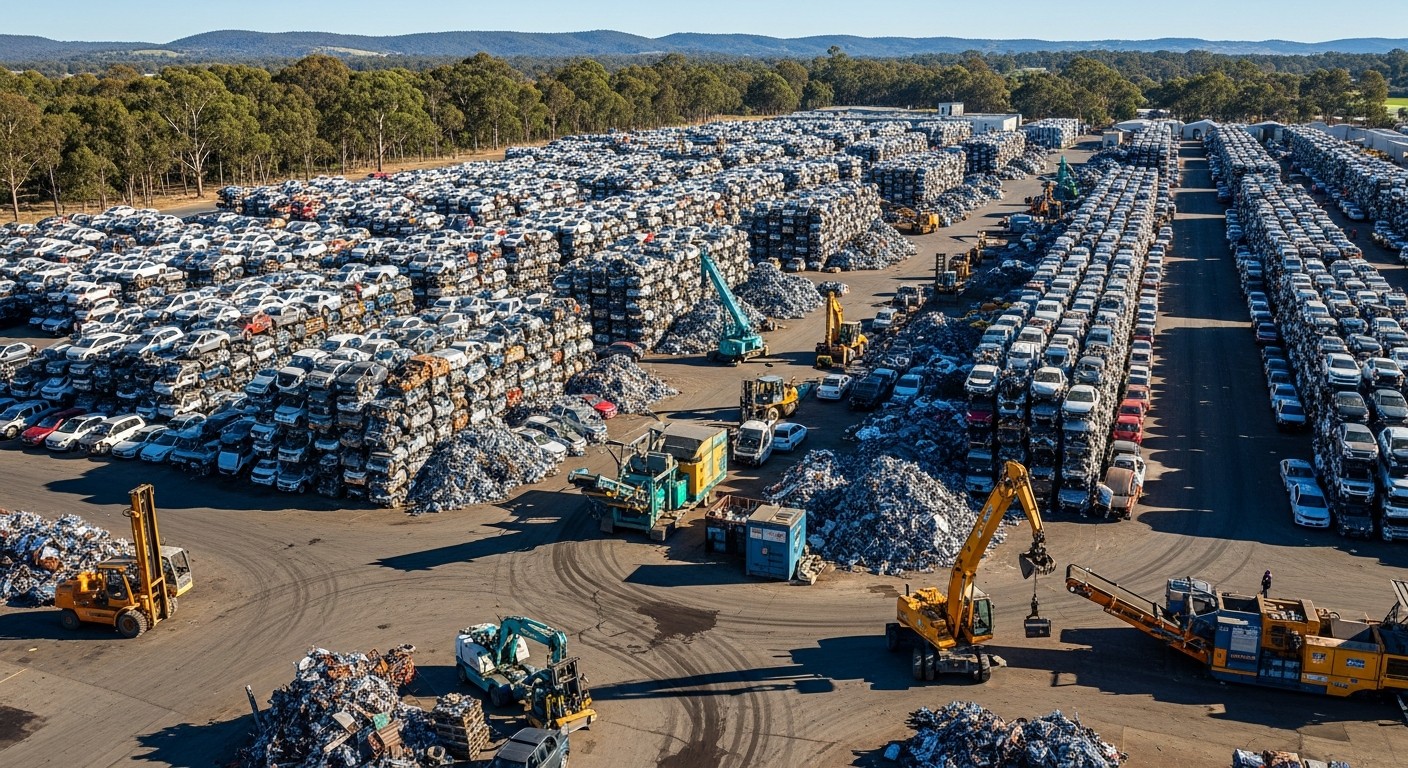
A car wrecker by another name
A car wrecker — also called an auto dismantler, auto recycler or wrecking yard — is a business that buys end-of-life vehicles, dismantles them, and resells the working parts. In Australia the industry is regulated state-by-state under second-hand dealer / motor vehicle dealer laws and the dismantling-licence regime, with state police, transport authorities and EPA all involved depending on the jurisdiction.
Most of the cars a wrecker buys are statutory write-offs from insurance auctions (Pickles, Manheim, IAAI), trade-ins that aren't worth fixing, repairable write-offs the previous owner sold rather than rebuilt, or older cars at end of life. The wrecker pays for the car, dismantles it, grades each part, photographs it, and lists it for sale through their own front counter, eBay, Facebook, dedicated wrecker networks like Pickapart and All Auto Parts, and increasingly through marketplaces like GearSwap.
What a wrecker does on day one of a car
When a vehicle arrives at a wrecking yard it goes through a process. First, the vehicle is logged against an inbound stock number and photographed in the yard. Fluids (fuel, oil, coolant, brake fluid, transmission fluid, refrigerant) are drained into recovery tanks for proper disposal — wreckers are bound by EPA regulations on this. The battery is removed and either tested for resale or sent to a recycler.
The vehicle is then deregistered and the relevant state transport authority is notified that it's been written off and dismantled. This step matters: it stops the VIN being used to re-identify a stolen car later (the "rebirthing" trade), and it's a legal requirement, not optional.
Next comes a damage assessment to identify which parts are sellable and in what condition. A skilled assessor walks around the car with a clipboard or tablet, working through every system: engine, drivetrain, body panels, interior, glass, electronics, lights. Each part is graded A/B/C and the assessor notes anything that needs to be tested before sale (such as ECUs and instrument clusters).
Then the dismantling
Dismantling proceeds systematically. Interior comes out first — seats, trim, dash, headliner, carpet — because those parts are easy to damage if you wait until the body is on its side. Then bolt-on body panels: bonnet, guards, doors, bumpers, tailgate. Then mechanical: engine, transmission, suspension, brakes, fuel system, exhaust. Finally the body shell, which goes to a metal recycler for steel and aluminium recovery.
Every salvageable part is tagged with the donor vehicle's stock number, condition graded, photographed, weighed for freight purposes and added to the wrecker's inventory system. Good wreckers can find any part of any donor in their yard within minutes; less-organised ones can take days, which is one reason fitment-matched marketplaces have replaced ringing around.
Why used parts are good for the planet
Manufacturing a new car part has a meaningful carbon and material cost — mining ore, smelting, forming, machining, painting, packaging and shipping, often from the other side of the world. Reusing a part that already exists has almost none of that cost; the part has already been made.
Australia wrecks roughly 600,000+ end-of-life vehicles a year. Every one of those is a parts catalogue waiting to be reused before it's recycled into raw steel and aluminium. Buying used isn't just cheaper — it keeps usable parts out of the smelter for another decade.
How to buy from a wrecker
Traditionally, you'd ring around twenty wreckers describing your part. The good ones would say yes, the rest would say no or never call back. You'd then drive across town to inspect, only to find the part had been sold that morning to someone else. The whole process could take days.
GearSwap Marketplace replaces that with one search: post a parts request once with your VIN and the part you need, verified Australian wreckers across the country see it, and you get back competitive quotes — often within a few hours. Quotes show price, condition, location and seller rating side-by-side.
Once you accept a quote, GearSwap holds your funds in escrow until the part is delivered and confirmed as described. If anything goes wrong — wrong part, damaged in transit, doesn't match the photos — you're protected and the funds aren't released to the seller until it's resolved.
Wrecker vs scrap yard vs auto recycler
A scrap yard buys cars for steel value and crushes them. A wrecker harvests parts first, then sends the shell for scrap. The two often share an industrial address, but the workflow is opposite: a scrap yard wants the shell, a wrecker wants the parts. If you're shopping for a part, you want a wrecker, not a scrap yard.
"Auto recycler" is the modern industry-preferred term for a wrecker — it captures both the parts side and the responsible end-of-life vehicle handling side. The Auto Parts Recyclers Association of Australia (APRAA) is the industry body, and APRAA members commit to standards on environmental handling, parts grading and consumer protection that go beyond the legal minimum.
Pull-it-yourself yards
A specific subset of wreckers run "U-Pull" or "Pick-a-Part" yards: rows of donor vehicles on stands that you walk up to with your own tools and remove the part yourself. Pricing is usually flat-rate by part type rather than per-listing, and it's by far the cheapest option if you're confident with a spanner and have the time.
Trade-offs: parts aren't graded or guaranteed, the car you need might not be in the yard today, and you do the labour. For body panels and interior parts on common cars it's a bargain; for anything that needs testing (electronics, mechanical), buying graded stock from a traditional wrecker is usually a better idea.
How wreckers price a part
Used-part pricing isn't arbitrary. A wrecker starts with the dealer-new price as a ceiling, applies an industry rule-of-thumb (typically 30–50% of new for a graded A part, 20–30% for B, 10–20% for C), then adjusts for local supply and demand. A common Hilux bonnet might land at 25% of new because every wrecker has one; a rare grey-import sedan headlight might land at 70% of new because there are three in the country.
Donor kilometres matter for mechanical pricing. An engine from a 60,000 km hail write-off prices very differently from an engine from a 280,000 km end-of-life trade-in, even though both are functional. Reputable wreckers disclose donor kilometres in the listing; the better marketplaces require it.
Buying from a wrecker as a trade workshop
For workshops, wreckers are a daily supply chain, not a once-a-year purchase. Most wreckers offer trade pricing, account terms (usually 7- or 14-day) and same-day delivery within metro for trade customers. The conversation is usually "what do you have for a 2016 Outback wagon, dent in the right rear quarter, customer's in tomorrow?" and the wrecker either has it or doesn't.
GearSwap's parts-request workflow is built around exactly that scenario: a workshop posts the request once, every wrecker who has the part quotes back, the workshop picks the best fit, and the part is on a courier the same day. The trade equivalent of forty phone calls compressed into a five-minute web form.
Regulation and what to look for in a reputable wrecker
A reputable Australian wrecker holds the appropriate state second-hand dealer / motor vehicle dealer / dismantler licence, has a fixed business address (not a residential one), an active ABN, and is willing to provide a tax invoice with their ABN on it. They follow EPA fluid-handling rules, dispose of refrigerant through a licensed recovery service, and notify the relevant transport authority of every vehicle they dismantle.
On a marketplace like GearSwap, sellers are pre-vetted on these criteria before they're approved to list, and ratings give you an ongoing signal on how each wrecker actually performs. A wrecker who is easy to deal with on small parts will be easy to deal with on big ones too.
Specialist wreckers vs general yards
Some wreckers specialise in a single make or a small group of makes — Toyota wreckers, European wreckers, 4WD wreckers, Japanese performance wreckers. Specialists know the model platform inside out, often have multiple donors of the same model, and can answer fitment questions a generalist would have to look up.
General yards carry a wider variety of stock and are usually the right call for everyday cars where any wrecker will have one or two donors at any given time. For rare models, hunt down the specialist; for a Camry bumper, the local generalist will have it on the shelf. Marketplaces help here because the parts request is broadcast to both at once and you don't have to know which is which.
What happens to the parts that don't sell
Not every part on a donor vehicle finds a buyer. Slow-moving stock either gets clearance-priced after a few months, sold in bulk to other wreckers in different states (where supply is short), broken down for raw material, or eventually crushed with the shell when the donor is decommissioned from the inventory.
That's why pricing on used parts is dynamic: a part that's been sitting on the shelf for nine months is more negotiable than a part that came off the donor yesterday. It's worth asking, politely, whether there's any movement on price for older stock — the worst answer is no.
Frequently asked questions
What does a car wrecker actually do?
A car wrecker — also called an auto dismantler or auto recycler — buys end-of-life vehicles, dismantles them, grades and photographs every working part, and resells those parts. The leftover shell is then sent for steel and aluminium recycling.
What is the difference between a car wrecker and a scrap yard?
A scrap yard buys cars for steel value and crushes them. A wrecker harvests the working parts first, then sends the shell for scrap. If you're shopping for a part, you want a wrecker, not a scrap yard.
Where do car wreckers get their cars from?
Most wreckers buy statutory write-offs from insurance auctions like Pickles, Manheim and IAAI, plus dealer trade-ins that aren't worth repairing and older cars at end of life. Each donor vehicle is logged with a stock number so every part can be traced back to its source car.
Are car wreckers regulated in Australia?
Yes. Wreckers are regulated state-by-state under second-hand dealer and motor vehicle dealer laws, plus dismantling-licence requirements. Licensed wreckers must record every donor vehicle, deregister written-off cars with the relevant transport authority, and follow rules on storing and disposing of fluids and hazardous components.
How do I buy a part from a wrecker without ringing around twenty yards?
Post a parts request on GearSwap Marketplace once and verified Australian wreckers — each with a green Verified Seller badge — see it and quote you direct, usually within a few hours. Fitment-Matched search means the results you see are parts confirmed to fit your vehicle. When you accept a quote, GearSwap holds your payment via Stripe Connect until the part arrives and is confirmed as described.
Ready to shop?
Browse 10,000+ used parts from verified Australian wreckers, or post a free parts request and have wreckers quote you direct.
Browse Parts Post a RequestJump straight to listings
Popular categories
Browse by state